5 Things Your Insurance Company Won't Tell You About Property Restoration
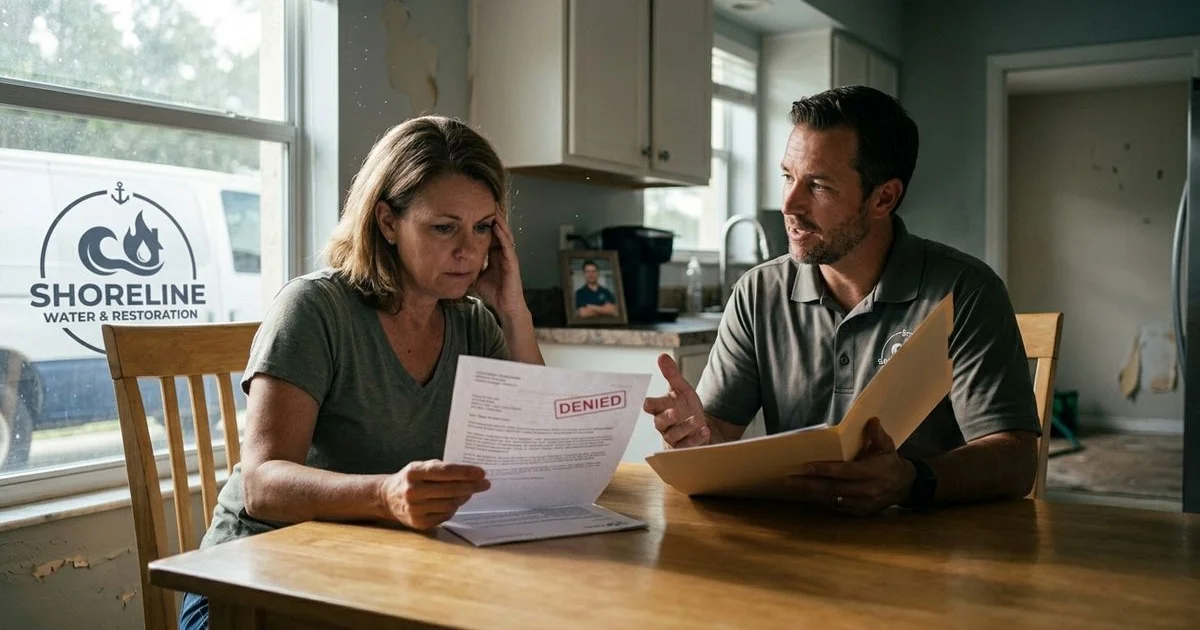
Your insurance company is not your adversary — but their adjuster does not work for you. The adjuster works for the insurance carrier, and their role is to assess damage and determine the carrier’s financial obligation under your policy. That is a different goal than maximizing your restoration coverage.
Here are five critical facts about the insurance-restoration relationship that most Cape Coral homeowners do not learn until they are in the middle of a claim.
1. You Have the Right to Choose Your Own Restoration Company
When you call your insurance company to report water damage, fire damage, or any property loss, the representative will often offer to “send someone out” or recommend a preferred vendor from their network. Many homeowners assume they must use the insurance company’s recommended contractor.
The truth: You have the absolute right to choose any licensed, insured restoration company you want. Insurance-recommended contractors are not necessarily better — they are companies that have agreements with the carrier, which may include pricing concessions or scope limitations that benefit the insurer, not you.
When you choose your own restoration company, that company works for you and advocates for your interests during the claims process. An insurance-recommended company has a relationship with the carrier that may influence their scope recommendations.
This does not mean insurance-recommended companies are bad — many are excellent. But you should choose your contractor based on qualifications, reputation, and your comfort level, not because the insurance company directed you.
2. The First Adjuster Estimate Is Often Incomplete
Insurance adjusters inspect your property and prepare a damage estimate, typically using Xactimate. The initial estimate is based on what the adjuster can see during a single visit, which is often limited by:
- Drywall still in place (hiding moisture and mold behind walls)
- Flooring still installed (concealing subfloor damage)
- Limited access to attics, crawl spaces, and ductwork
- Time constraints (adjusters handle many claims simultaneously, especially after storms)
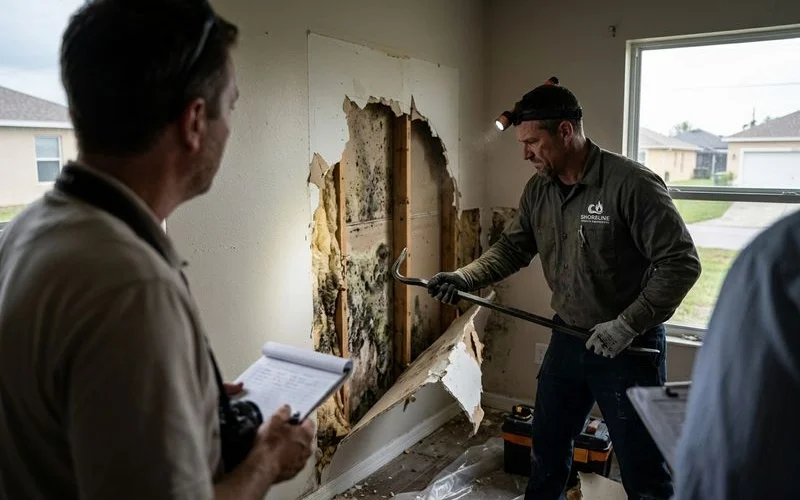
The truth: The initial adjuster estimate frequently underestimates the total scope of work. Additional damage is commonly discovered during restoration — hidden moisture, mold behind walls, damaged subfloors under tile, compromised insulation, and contaminated ductwork. This is normal, and the claims process has a mechanism for it: supplements.
Your restoration company should file supplemental claims for any additional damage discovered during the project. Do not absorb these costs yourself — they are legitimate additions to your covered claim.
3. Delaying Mitigation Costs You Money — Not the Insurance Company
Insurance policies require you to mitigate (prevent further damage). If you delay calling a restoration company because you are waiting for the adjuster, waiting for insurance approval, or hoping the problem resolves itself, the damage escalates. And here is the part many homeowners miss:
The truth: Your insurance company is not financially responsible for damage that results from your failure to mitigate. If a burst pipe floods your living room and you wait three days to begin water extraction, the mold that grows during that delay may not be covered because it was preventable. The insurer’s position: you had a duty to mitigate, and you failed to act.
Emergency mitigation does not require pre-approval from your insurance company. Begin water extraction, board-up, tarping, or whatever protective measures are needed immediately. The insurance company will cover reasonable mitigation costs — they actually prefer it because it reduces the total claim.
4. Your Policy May Have Limits You Do Not Know About
Most homeowners know their dwelling coverage amount and their deductible. But many policies contain sub-limits and exclusions that are not obvious until you file a claim:
Mold sub-limits. Many Florida policies cap mold damage coverage at a specific amount ($10,000-$25,000), even if the total claim is much larger. If water damage leads to significant mold growth, you may hit this cap quickly.
Ordinance and law coverage. If restoration work triggers a requirement to bring the property up to current building code standards, the additional cost may not be covered unless you have “ordinance and law” coverage on your policy.
Matching coverage. If your kitchen has continuous tile flooring and water damage requires replacing tile in half the kitchen, will insurance pay to match the undamaged half? Not always. Some policies cover matching; others do not.
Personal property limits. High-value items (jewelry, art, electronics, firearms) may have specific per-item or category limits within your contents coverage.
Review your policy before you need it. Understanding these details before a loss helps you set expectations and avoid surprises during the claims process.
5. You Can Dispute an Inadequate Settlement
If your insurance company’s estimate does not cover the full scope of necessary restoration work, you are not required to accept it. You have several options:
Internal appeal. Request a re-inspection by a senior adjuster or submit additional documentation (photos, moisture readings, contractor estimates) supporting the additional scope.
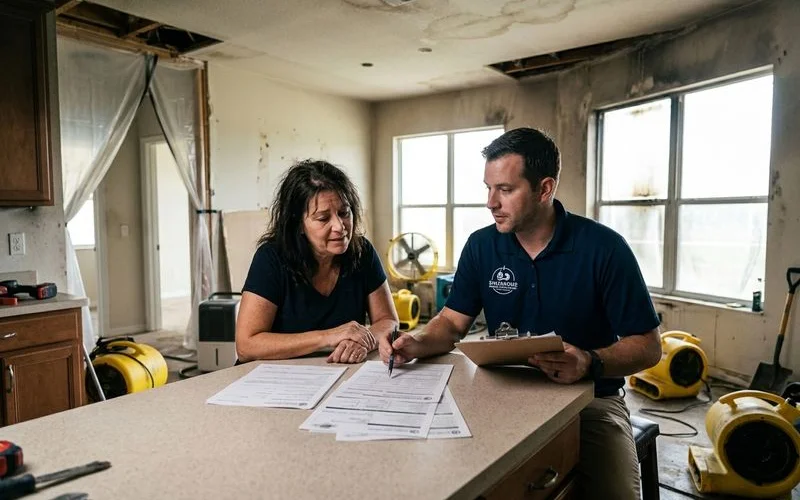
Supplement process. Your restoration company can file supplements for additional work discovered during restoration. This is the most common and effective method for increasing claim coverage.
Appraisal clause. Most Florida policies include an appraisal clause — a process where each party hires an independent appraiser, and a neutral umpire resolves disputes. This is less adversarial and less expensive than litigation.
Public adjuster. A licensed public adjuster works for you (not the insurance company) and negotiates the claim on your behalf. They typically charge 10% of the settlement but often recover significantly more than the homeowner would alone. Public adjusters are particularly valuable for large or complex claims.
Department of Financial Services complaint. If you believe your insurance company is acting in bad faith, you can file a complaint with the Florida Department of Financial Services, which regulates insurance companies.
The Bottom Line
Your insurance policy is a contract that entitles you to fair coverage for covered losses. The claims process is designed to work, but it works best when you understand your rights, document thoroughly, choose your own qualified restoration company, and do not accept inadequate settlements without challenge.
At Shoreline Water & Restoration, we bill insurance carriers directly, prepare Xactimate estimates, file supplements for additional damage, and advocate for fair coverage throughout the claims process. Our goal is the same as yours: full restoration of your property to pre-loss condition.
Call (239) 268-8546 for restoration with complete insurance claims support in Cape Coral.

Paul Breehne
Regional Franchise Operator
Paul Breehne is a Regional Franchise Operator for Shoreline Water & Restoration in Southwest Florida, bringing over a decade of hands-on restoration experience to the Cape Coral market.
Need Emergency Restoration?
Shoreline Water & Restoration provides 60-minute emergency response in Cape Coral.
Call (239) 268-8546