Sewage Backup Health Risks Every Cape Coral Homeowner Should Know
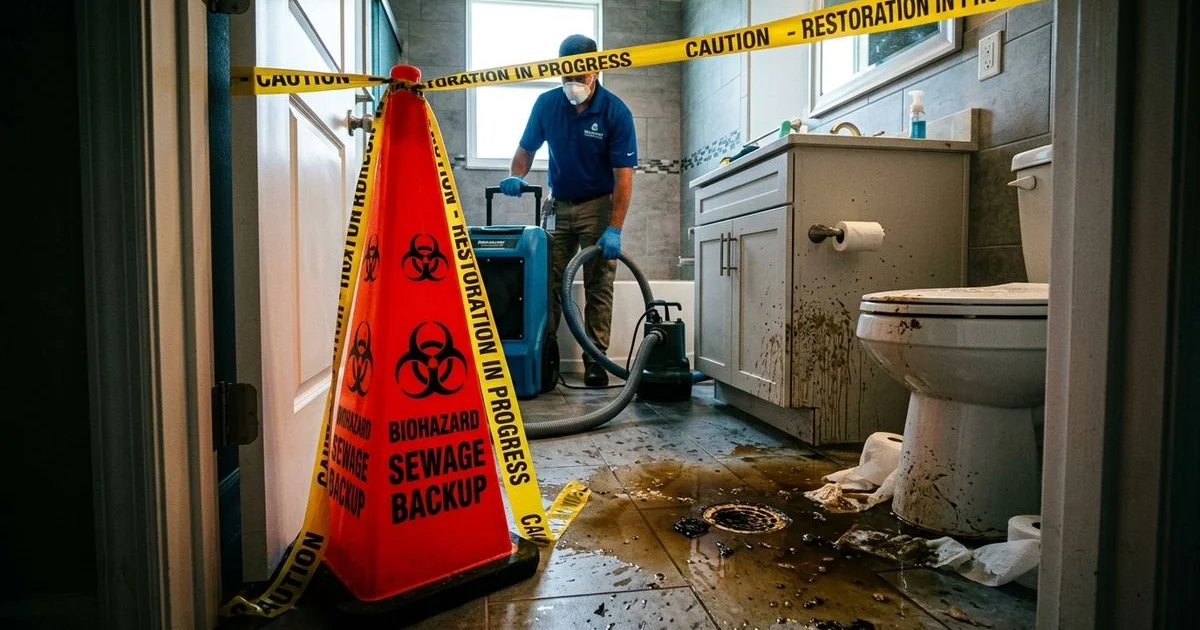
A sewage backup in your Cape Coral home is more than an unpleasant mess — it is a genuine health emergency. Sewage water, classified as Category 3 (black water) by the IICRC, contains dangerous concentrations of bacteria, viruses, parasites, and chemical contaminants that can cause serious illness from direct contact, ingestion, or inhalation of contaminated air.
Understanding these health risks is not meant to cause alarm — it is meant to help you understand why professional sewage cleanup is essential and why you should never attempt to clean up a sewage backup yourself.
What Is in Sewage Water
Sewage water is a mixture of human waste, household chemicals, and whatever else enters the municipal sewer or septic system. Specific contaminants include:
Bacteria:
- E. coli — causes severe gastrointestinal illness, kidney failure in severe cases
- Salmonella — causes salmonellosis (diarrhea, fever, abdominal cramps)
- Shigella — causes dysentery (severe diarrhea with blood)
- Campylobacter — one of the most common causes of bacterial gastroenteritis
- Leptospira — causes leptospirosis, which can lead to liver and kidney damage
Viruses:
- Hepatitis A — causes liver inflammation, jaundice, and fatigue
- Norovirus — causes severe vomiting and diarrhea (extremely contagious)
- Rotavirus — causes severe diarrhea, primarily dangerous for young children
- Adenovirus — causes respiratory and gastrointestinal illness
Parasites:
- Giardia — causes giardiasis (diarrhea, nausea, weight loss)
- Cryptosporidium — causes cryptosporidiosis (watery diarrhea lasting up to 3 weeks)
- Roundworm eggs — can survive in the environment for months
Chemical contaminants:
- Household chemicals (cleaners, detergents, pharmaceuticals)
- Hydrogen sulfide gas — toxic at high concentrations, causes eye and respiratory irritation
- Methane — explosive in confined spaces, displaces oxygen
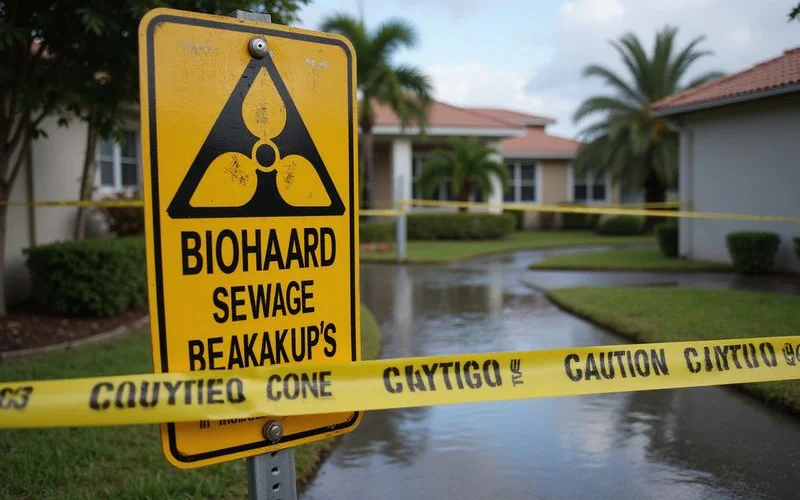
How Sewage Exposure Occurs
Direct skin contact. Walking through sewage water, touching contaminated surfaces, or handling contaminated items allows pathogens to enter through cuts, abrasions, or skin absorption. Even intact skin can absorb certain chemicals present in sewage.
Ingestion. Accidentally touching your face, eating, or drinking after contact with contaminated surfaces introduces pathogens orally. Children are at particular risk due to hand-to-mouth behavior.
Inhalation. Sewage releases bioaerosols — microscopic droplets containing bacteria and viruses that become airborne, especially during cleanup activities. Hydrogen sulfide gas, recognizable by its rotten egg smell, is also released and can cause respiratory distress at elevated concentrations.
Post-cleanup contact. If sewage is not properly cleaned and decontaminated, dried residue on surfaces, in carpet, and in porous materials continues harboring pathogens. Family members can be exposed weeks or months later when contacting these surfaces.
Who Is Most at Risk
While sewage exposure is dangerous for everyone, certain groups face elevated health risks:
- Children under 5 — developing immune systems, frequent hand-to-mouth contact
- Elderly adults — reduced immune function, greater susceptibility to infection
- Pregnant women — some sewage-borne infections can affect fetal development
- Immunocompromised individuals — anyone with HIV/AIDS, undergoing chemotherapy, on immunosuppressive medications, or with autoimmune conditions
- People with open wounds — cuts, surgical sites, and skin conditions provide direct pathogen entry
Symptoms of Sewage Exposure
If you or a family member has been exposed to sewage water, watch for these symptoms in the following days:
- Nausea, vomiting, and diarrhea (onset 1-3 days after exposure)
- Fever and chills
- Abdominal cramping
- Headache and fatigue
- Eye irritation or conjunctivitis
- Skin rashes or irritation
- Respiratory symptoms (coughing, difficulty breathing)
- Jaundice (yellowing of skin and eyes — seek immediate medical attention)
If symptoms develop, inform your healthcare provider about the sewage exposure. This information helps them order the right tests and prescribe appropriate treatment.
Why DIY Sewage Cleanup Is Dangerous
Attempting to clean up a sewage backup yourself exposes you to all of the risks described above without the protection of professional biohazard cleanup equipment and training:
- No respiratory protection — household dust masks do not filter biological aerosols. Professional cleanup requires N95 or higher respirators.
- Inadequate PPE — rubber gloves and rain boots do not provide the barrier protection of professional Tyvek suits, face shields, and chemical-resistant PPE.
- Surface cleaning is insufficient — household cleaners and bleach do not achieve decontamination of porous materials (drywall, wood, carpet, concrete). These materials absorb sewage and continue harboring pathogens after surface cleaning.
- Cross-contamination risk — without training in containment procedures, DIY cleanup spreads contamination to other areas of your home through footwear, cleaning tools, and airborne particles.
- No verification — professional teams verify decontamination using ATP testing. Without verification, you have no way to confirm that surfaces are actually safe.
What Professional Sewage Cleanup Includes
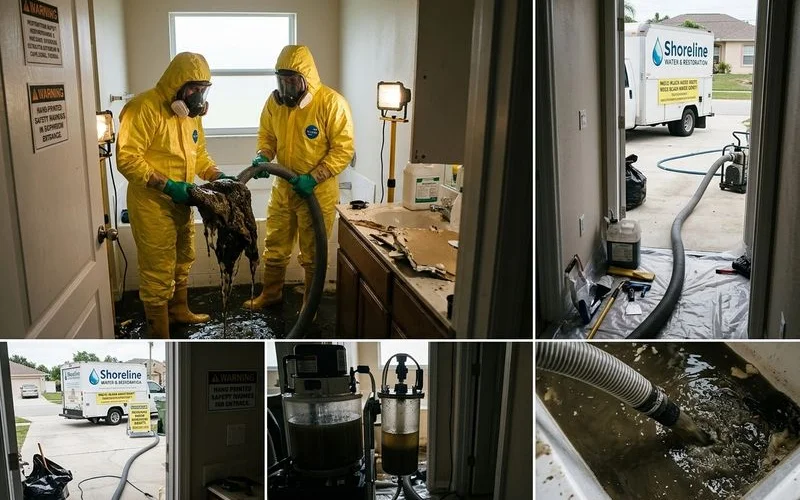
Professional sewage cleanup follows strict protocols designed to protect both the occupants and the cleanup crew:
- Full PPE for all personnel (Tyvek suits, respirators, face shields, chemical-resistant boots)
- Containment barriers to prevent cross-contamination
- HVAC shutdown to stop contaminated air circulation
- Complete extraction of sewage water using sealed equipment
- Removal of all porous materials that contacted sewage (carpet, padding, drywall, insulation)
- Multi-step decontamination with hospital-grade disinfectants
- HEPA air filtration for airborne pathogen removal
- Odor elimination using hydroxyl generators
- ATP testing to verify decontamination success
- Structural drying and reconstruction
After a Sewage Backup
Do not enter the affected area without appropriate protection. If sewage has flooded a portion of your home, close the door to that area and call for professional help.
Turn off HVAC if the affected area has return air vents — running the system will spread contaminated air throughout your home.
Keep children and pets away from the contaminated area.
Call for professional cleanup immediately — the health risks of sewage are too serious for DIY approaches.
Call (239) 268-8546 for emergency sewage backup cleanup in Cape Coral. Certified technicians available 24/7 with full decontamination capabilities.

Gary Stone
Regional Franchise Operator
Gary Stone co-operates the Shoreline Water & Restoration Cape Coral franchise, specializing in commercial restoration and hurricane damage recovery.
Need Emergency Restoration?
Shoreline Water & Restoration provides 60-minute emergency response in Cape Coral.
Call (239) 268-8546